Showing posts with label Lord Pearson. Show all posts

Saturday, 7 June 2014

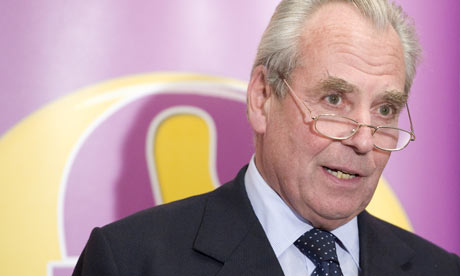
Lord Pearson demands more UKIP peers

UKIP peer, Lord Pearson, has written to the Cabinet Office demanding that UKIP be given more representation in the House of Lords to reflect the party's vote share.

The Conservative/Lib Dem coalition agreement promised to make the House of Lords reflect the vote share at the last general election which would mean give UKIP 23 peers according to University College of London. UKIP currently has 3 peers, all of which defected from the Conservatives.

The Cabinet Office says that it has no plans to increase the number of UKIP peers in the House of Lords.

Monday, 8 November 2010

Nuttall appointed Deputy Leader

Nigel Farage's new team has been confirmed by the NEC today and by far the most pleasing and important appointment is Paul Nuttall as Deputy Leader.

The only person who could have really given Farage a run for his money in the leadership election (had he decided to stand) was Paul Nuttall.  He's an excellent speaker, politically astute, down to earth and approachable.

It's not clear whether Lord Monckton is remaining vice-deputy leader or not.  Having two leaders is unusual and not really necessary.  The deputy leader has a clear role - to deputise for the leader - and I don't see why we would ever need two deputies.  Nigel's a hard act to follow but it doesn't take two people!

Steve Crowther is the new Chairman, the Secretary is Michael Greaves and Lord Pearson is head of fundraising with Stephen Woolfe assisting.

Congratulations to all of Nigel's new team.

Tuesday, 17 August 2010

Lord Pearson resigns as Leader

Lord Pearson has decided to call it a day as Leader of UKIP after a somewhat inconsistent year at the helm.

After a pretty convincing victory in last year's leadership elections, Lord Pearson took over the reins with promises of defections, new money and electoral victory.  High profile defections have been conspicuously absent but new money has been trickling in and although we failed to get an MP elected in the general election, we did increase our vote by 50% to almost a million votes.

So Lord Pearson's brief tenure, whilst not exactly the best 12 months we've had, certainly hasn't been a disaster.

But what's important now is the succession.  We have an NEC election right now and an interim leader will be appointed at the conference next month.  It's an opportunity to change the entire leadership of the party but we must be careful not to change things for change's sake - we need some stability.

I believe that David Campbell Bannerman has put his hat into the ring already and it looks like Frank Maloney is going to do the same.  Paul Nuttall seems to be a popular suggestion with members and Nigel Farage won't rule out standing again.

Paul is doing a fantastic job as Chairman of the party and as an MEP.  He would make an excellent Leader - possibly the only man (or woman), in my opinion, that can fill Nigel's shoes.  Nigel remains our most high profile figure and the publicity his return would generate would be very useful.

Until we get a full list of candidates, it's impossible to say who the best person is for the job but so far only Paul Nuttall or Nigel Farage would get my vote.

Thursday, 3 June 2010

Lord Monckton appointed Deputy Leader

Lord Pearson has appointed Viscount Christopher Monckton as Joint Deputy Leader of UKIP, alongside David Campbell Bannerman.

Lord Monckton is an outspoken and respected climate change realist and a controversial public figure - exactly what is needed to attract publicity and show the voting public that UKIP is different to the tired old parties.

However, this appointment does raise some concerns for me personally.  Of the three top people in the party, two are Scots and two are Lords.

Whether we like it or not, UKIP is an English party.  In the general election this year, UKIP retained only one deposit in both Scotland and Wales.  A party led by Scots opposing devolution for England does not sit well with English voters and having two Lords in charge isn't going to do a lot for our ambition to attract voters from all parties rather than the Tories (we do attract members from other parties but it's still mainly the Tories).  And Lord Monckton isn't without his Scottish ties either - he's pictured on the UKIP website wearing his family tartan and he founded the Tory breakaway group, the Scottish Peoples Alliance (now the New Party).

I remain as committed to UKIP as I always have been but the Brit/Scot leadership is really not going to improve our chances of electoral success.

Monday, 10 May 2010

Is it time for Lord Pearson to go?


Tuesday, 4 May 2010

Lord Pearson visits Ludlow's next MP

Lord Pearson took a trip up the M6 today to visit Christopher Gill, the UKIP candidate for South Shropshire.

South Shropshire is a target seat for UKIP with Chris Gill (who was Conservative MP for the constituency a decade ago) worrying the incumbent Tory, Philip Dunne, so much that he's spent the last few days scaremongering about a hung election.  Rather than spending the last couple of days of the election campaign giving people a positive reason why they should vote for him, he has instead been making up bizarre scare stories about how interest rates will go up with a hung parliament!

Lord Pearson was shown around Bridgnorth by (amongst others) Shropshire PPCs Christopher Gill, Councillor Denis Allen and Malcolm Hurst; Councillor Derek Armstrong and UKIP NEC member, Councillor Jill Seymour.

Meanwhile, the Shropshire Star is very much of the opinion that Chris Gill is going to cause an upset on Thursday.

Tuesday, 27 April 2010

UKIP to seek injunction against BBC

Lord Pearson has written to the BBC warning them that UKIP will be seeking an injunction requiring them to give equal billing to Lord Pearson in the Leaders' Debate on Thursday. The text of his letter is as follows:
Leader's Office
United Kingdom Independence Party
Room 230
10 Greycoat Place
London SW1P 1SB
Mark Thompson, Esq.,
Director-General,
British Broadcasting Corporation,
White City,
201 Wood Lane,
London W12 7TS.
27 April 2010
Dear Mark,

Proposed claim for judicial review

I wrote to Sir Michael Lyons at the BBC Trust on 22 December, asking that UKIP should be allowed to participate in the televised debates between party leaders. Sir Michael wrote explaining that you rather than the Trust were the appropriate point of contact, and you wrote to me on 15 January 2010, conveying to me your decision and that of the BBC to reject my request on the following grounds:

"The basis on which judgements are made about relative levels of coverage rests on past and current electoral support. For the election to the House of Commons in 2010, the starting point is the last General Election, in 2005. Similarly, the starting point for coverage of the 2009 European election was the previous European election of 2004. This means that UKIP - on the basis of its strong performance in 2004 - was given the same level of coverage in the 2009 election as the Labour, Conservative and Liberal Democrat parties. In 2005, however, at the last General Election (notwithstanding its performance at the European election less than a year before), UKIP attracted just over 2% of the vote and won no representation at Westminster.

"It is, therefore, appropriate and consistent for the BBC - and other broadcasters - to offer the opportunity to take part in the Prime Ministerial debates only to those parties which have substantial electoral support in the context of Westminster. There will be additional opportunities across the BBC for other parties to receive appropriate coverage responding to the Prime Ministerial debate."

We have been given no adequate opportunity to respond to the first two debates. What arrangements is the BBC making to address this? How can the coverage be "appropriate" if we cannot reach the leaders' audience?

The first two of the party leaders' debates have been held and, as I feared, have given spectacular prominence to the three parties whom you, ITV and Sky TV allowed to take part. The unfairness in our being excluded from the party leaders' debates is now all too evident.

Most recently, I wrote to you on 23 April, sending you my recent correspondence with Sky TV, and inviting you to rectify the lack of impartiality which broadcasters have demonstrated in refusing to allow UKIP to participate in the televised leaders' debates. I have not had a reply to my letter to you. The final leaders' debate is in just two days' time. The matter is now urgent, and I have done my best to pursue it timeously.

Since time is now short, I have taken advice, in the light of which I should like to draw your attention to the following provisions in the BBC's own election guidelines:

"3. Due Impartiality in coverage of parties and issues

"3.1 Coverage of the Parties

"To achieve due impartiality, each bulletin, programme or programme strand, as well as online and interactive services, for each election, must ensure that the parties are covered proportionately over an appropriate period, normally across a week. This means taking into account levels of past and current electoral support.

"Due impartiality must be achieved within these categories:

"clips;
"interviews/discussions of up to 10 minutes;
"longer-form programmes.

"Previous electoral support in equivalent elections is the starting-point for making judgments about the proportionate level of coverage between parties.

"However, other factors can be taken into account where appropriate, including evidence of variation in levels of support in more recent elections, changed political circumstances (e.g. new parties or party splits) as well as other evidence of current support. The number of candidates a party is standing may also be a factor." [my emphasis]

These election guidelines - as you may know - were approved by Jenny Watson, the chairman of the Electoral Commission, in a letter dated 11 January 2010 to Ric Bailey, the BBC's Chief Adviser for Politics (Editorial Policy), as follows:

"In addition we are satisfied with the draft Election Guidelines, and the approach taken regarding the participation of candidates in constituency items during the election period."

In the last "equivalent" election, the 2005 General Election, UKIP won 2.2% of the national vote, as you have pointed out. However, in the more recent European Election of last year, UKIP came second in the UK, with 16.5% of the national vote, compared with 15.7% for Labour and 13.7% for the Liberal Democrats. This surely constitutes compelling "evidence of variation in levels of support in more recent elections". In the circumstances, I should have expected your correspondence to have referred to this provision within your election guidelines. You have allowed Labour and the Liberal Democrats to participate in the leaders' debates, though they received smaller shares of the vote than UKIP in the most recent test of national opinion, which was the European Election of last year. Yet you have denied UKIP the chance to participate.

Furthermore, UKIP - as of today - is fielding 560 candidates, a number not far short of those fielded by the three parties whom you are allowing to participate in the leaders' debate. As your own guidelines say, "The number of candidates a party is standing may also be a factor." I should have expected your correspondence to have referred to this provision of your electoral guidelines too. Certainly, UKIP - in the number of candidates we are fielding in this General Election - is close to parity with those parties whom you are allowing to participate.

Both these circumstances are directly relevant to any decision whether to allow UKIP to participate in the leaders' debates. Yet you do not seem to have taken account of them in your decision as conveyed to me, or in any of our subsequent discussions.

There is also the question of the BBC's obligations under its charter, which has been the subject of correspondence between us on many previous occasions. In the leaders' debate so far, the question of our EU membership, its lack of democratic accountability and its heavy financial and constitutional cost has not been debated at all. Mr. Brown has been allowed to get away with saying, unchallenged, that three million jobs depend on our membership of the European Union. Nor has there been any discussion of our proposal to introduce binding initiative referenda at local as well as national level, which is the only effective way to allow us, the people, to rule once more, as well as to address the issue of corruption in Parliament, to say nothing of the increasing gulf between government and the governed.

It is reasonable and proportionate, having regard to the election guidelines as cited above, and having regard to the absence of UKIP from the first two leaders' debates, that UKIP should be allowed to participate fairly and fully in the final leaders' debate.

Since you did not adopt my original suggestion that UKIP should at least be allowed to participate in some part of each debate, and since all other avenues available to me have been exhausted, and since UKIP has been denied the opportunity to participate at all in either of the first two debates, and since time is running out, I must now ask you to reconsider your refusal to allow UKIP to participate in the third and final leaders' debate, to be aired on Thursday evening, 29 April 2010.

Should you and the BBC fail to accede to this request by noon tomorrow, Wednesday, 28 April, 2010, please take this letter as notice, in terms of the pre-action protocol in judicial review proceedings under the Civil Procedure Rules, that the United Kingdom Independence Party, of PO Box 480, Newton Abbot, Devon, TQ12 9BG, and I as UKIP's leader, as claimants, will apply to the Administrative Court at or as soon as practicable after 2 pm tomorrow afternoon for judicial review of your decision and that of the BBC, as defendants, expressed in your letter to me of 15 January 2010, to refuse to allow UKIP to participate in the third and final leaders' debate, and for an injunction requiring you and the BBC to permit me, as UKIP's leader, to participate in that debate on an equal footing with all others whom you and the BBC shall have permitted to participate.

I regret that the notice is very short, but time is pressing and I have not had an answer to my letter to you of 23 April.

Details of our legal advisers will be notified to you in due course. In the meantime, any reply and any court documents should be sent to me at the address below:

The Lord Pearson of Rannoch,
Leader's Office,
United Kingdom Independence Party,
Room 230,
10 Greycoat Place,
London SW1P 1SB.

Yours sincerely,

[signed] Malcolm

Lord Pearson of Rannoch
Of course the BBC will argue that the EU elections aren't equivalent to a general election and to a certain extent they are correct.  However, their own guidelines specifically say that past election results are a starting point.  UKIP's support has risen significantly since the last general election and the EU election results last year back that up - they may not be equivalent elections but electoral success on the scale that UKIP achieved wouldn't be possible without a general increase in support for UKIP.

UKIP has representation in all four home nations which is something only the Tory wing of the LibLabCon can claim.  UKIP is also standing 560 candidates in the general election. The BNP are standing 339 and the Greens about the same amount.  UKIP is head and shoulders above any of the small parties and set to make the biggest gains from the three failed parties.

The BBC have been inconsistent with their election coverage.  In some areas, all candidates have had equal billing and in others - Shropshire, for instance - the non-LibLabCon candidates have been virtually ignored.  I made two complaints to BBC Shropshire about the LibLabCon candidates being described as "the candidates" when their election programmes were being introduced or promoted when they are actually only half of the candidates.  The producer conceded the point on the second occasion and said he would issue revised guidance to staff but the BBC still present it as a three-horse race, they just slightly change the way they say it.

It's ironic that the BBC, which is left wing to the core, should actively seek to give an unfair advantage to the privileged and powerful LibLabCon who already have all the publicity, politicians and state funding at the expense of the non-LibLabCon parties such as UKIP who are deprived of publicity and no state funding and suffer as a result.  But then perhaps in the eyes of the BBC all political parties are equal but some are more equal than others?

Friday, 16 April 2010

Wells PPC refuses to stand aside for Tory eurosceptic

Lord Pearson's decision to ask UKIP candidates standing against a handful of genuinely eurosceptic sitting MPs is an interesting one and one that has ruffled a few feathers.

I'm not sure if all the MPs that Lord Pearson has asked candidates to stand aside for have signed the Better Off Out pledge or not.  There is a long-standing promise from UKIP not to stand against BOO signatories and unlike "Cast Iron" Dave, UKIP doesn't break its promises.

The UKIP PPC for Wells, Jake Baynes, is refusing to stand down to allow committed eurosceptic, David Heathcoat-Amory, a free run at the election.  This is, of course, entirely Jake's choice.  If he pays his £500 deposit, his branch selects him as a candidate and the party's deputy nominating officer accepts him as a candidate - which is clearly the case - then he has every right to stand.  Whether it is tactically the best decision when it splits the vote between two eurosceptic candidates is debatable but I don't agree with tactical voting because it invariably ends up with you getting someone you don't want.

But what I find interesting - and it reaffirms to me that I am in the right party - is Lord Pearson's response:
There's a debate going on, there has been a disagreement yes, to some extent.

"I don't mind that, I'm not going to crack the whip and say 'OK then, don't stand and go away'.
UKIP is different to the failed LibLabCon parties.  For a start, we have a leader that isn't standing for election and can concentrate on the whole party during the election.  But more important than that for me is that there is no whip.  No LibLabCon candidate would have been able to say no to their party in the way Jake Baynes has.  A LibLabCon candidate wouldn't be asked not to stand, they'd have been told not to and if they didn't comply they would have been banned from standing for their party.

All UKIP candidates, councillors and MEPs are bound by the party's core principles that are in the constitution but other than that, they are free to stand for whatever issues are important to them and that is one of the things that makes UKIP fundamentally different to the failed political parties.

Sunday, 4 April 2010

Sunday Times "sting"

It's worth letting the righteous spout their indignation before commenting on accusations of sleaze from newspapers ...

Statement from the UK Independence Party

Following the article in The Sunday Times (dated April 4th 2010) the UK Independence Party would like to make the following statement to clarify any misunderstandings.

As with all political parties, UKIP receives many offers of donations (both financial and voluntary help) everyday, so it was not unwise for Stuart Agnew MEP to follow up the offer made to him. Perhaps, however, it was naive of Mr Agnew not to realise it was a Sunday Times reporter in disguise. We would like to make it clear that no transaction between Mr Agnew and The Sunday Times journalist took place.

The UK Independence Party did receive donations via Global Britain, in 2009 for the European Election Campaign. All these donations were, at the time, perfectly legal and within the guidelines set down by the Electoral Commission. These donations were fully disclosed by UKIP in the second quarter of 2009.

When asked by The Sunday Times reporter if her anonymity could be guaranteed, Lord Pearson, Leader of the UK Independence Party, clearly stated (as reported in the Sunday Times article) that he would check with the Electoral Commission and "if there was any doubt I would honestly rather go without.'"

Lord Pearson also added that he was regularly in touch with the Electoral Commission over Global Britain and all donations.

Mark Wadsworth, UKIP Treasurer, said today: "All donations or loans to the UK Independence Party have been reported to the Electoral Commission."
The reporting of this "sting" by one of Rupert Murdoch's Tory-supporting newspapers was timed perfectly to try and cause maximum damage to the party that is going to cause maximum damage to Devious Dave's Conservatives in the election.  This has been in the pipeline since last month but has only been published after Nigel's appearance on Have I Got News For You and other positive media appearances.

Whilst some voters will undoubtedly be disappointed at the implication that UKIP is fiddling expenses, most will realise that this is the Sunday Times making a mountain out of a molehill.  There is nothing illegal about using intermediaries to donate money to political parties.  Millions of people don't opt out of the so-called political fighting fund (another name for what most of us would call a slush fund) when they join a union and contribute to the tens of millions of pounds that's funnelled straight into Labour Party funds.

We could really do without sleaze, real or imagined, but the important thing is, the law has not been broken.  All Stuart Agnew and Lord Pearson did was explain to what they thought was a potential donor how they could make an anonymous donation without breaking any rules.  It's unfortunate that Stuart Agnew told the undercover reporter that Peter Reeve doesn't do any work for him or David Campbell-Bannerman because it's not true.  Peter Reeve only works part time for the two MEPs and David Campbell-Bannerman does make use of his services.  The inevitable inquiry from the EU's anti-fraud unit, OLAF, will be an unnecessary distraction just as his services are most needed.

Thursday, 4 February 2010

Giz a job

Lord Pearson is looking for a new personal political assistant ...


Personal Political AssistantReference:23411
Posted: 04 February 10
working forLord Pearson of Rannoch
salaryStarting at £22,500
detailsThe job is located in Westminster, as Personal Assistant for Lord Pearson of Rannoch, Leader of UKIP.You should understand the European Union and be up to date on current affairs, such as radical Islam and Freedom of Speech. Skills required


  • you must be IT literate, as you will be responsible for all emails, and experienced in maintaining a filing system.


  • liaising with the Campaign Director and Press Office.


  • dealing with day to day correspondence.


  • dealing with media enquiries.


  • conducting research on an ad hoc basis.The post may require occasional evening working and will require flexible hours during the General Election. You should be available from the 22nd of February for a week’s handover period.

  • closes17 February 2010
    contactPlease submit your CV with a cover letter to:lordpearsonpersonalassistant@googlemail.com
    websitehttp://www.lordpearsonofrannoch.co.uk/

    I'd be tempted to go for it myself but I can't afford the pay cut, especially not with London prices!

    Tuesday, 1 December 2009

    William Hill says UKIP 2/1 to gain an MP

    Following the election of Lord Pearson as leader of UKIP, William Hill are now offering odds of 2/1 for UKIP to win one or more seats in the next general election.

    The odds of Nigel Farage beating John Bercow in Buckingham have been shortened to 5/1.

    Monday, 30 November 2009

    Lord Pearson claimed £100k expenses in 8 years ... what a shocker

    Shock horror!  Lord Pearson has claimed £100k in second home expenses that were not fraudulent and significantly less than most of the inhabitants of Westminster.

    Lord Pearson's main home is his estate in Scotland, his second home is in London.  He says he spends almost exactly half the year there.

    The £100k is the total claimed since 2001 - £12.5k per year.  This is significantly less than other peers and MPs, especially those based in Scotland.

    It turns out that these allowances were paid between April 2001 and June 2007, at a standard rate of £174 a night "for the purpose of attending sittings of the House". That works out at about £16,000 a year. Add the rest of the period and, in just over eight years, he has claimed £115,683 plus £56,685 subsistence – working out at about £20,000 a year.

    A typical MP over the same period, will have cost us about £1.8 million in salaries and expenses.

    Pearson, unlike many, is a working peer, and puts many hours in the House, for which he is paid no salary. Nor does he get a secretarial allowance, funding his secretary from his own pocket

    It must be a slow news day at the Torygraph if they're already scraping the bottom of the barrel looking for some sleaze on Lord Pearson.

    Sunday, 29 November 2009

    Lord Pearson and Nigel Farage offered to stand aside for the Tories

    Let me start by disappointing all those LibLabCon sheep who have been reading the "news" that UKIP is facing hundreds of resignations after Lord Pearson announced that UKIP had offered to stand aside for the Tories if they agreed to hold a referendum on the Lisbon Treaty/EU Constitution.

      There is no revolt in the party, there will be no wave of resignations.

    Lord Pearson, on the instructions of Nigel Farage, met with Lord Strathclyde (the Tory leader in the House of Lords) and told him that UKIP would not stand against the Tories in the next election if they agreed in writing to hold a referendum on the Lisbon Treaty/EU Constitution.  The Tories declined to answer and of course we now know for sure what the answer was.

    Let's put this offer into perspective:
    1. The offer was made before the Czech president capitulated and there was still a possibility that we would enter the election next year without the Lisbon Treaty/EU Constitution ratified.
    2. The fact that the Tories wouldn't take UKIP up on the offer was a given.  They were no more likely to commit to a referendum than the BNP to withdraw their policy of repatriating immigrants or the Greens to own up to the global warming scam.
    3. If the Tories had agreed to this deal then we would have had a referendum on leaving the European Empire because the Tories with a UKIP endorsement would be guaranteed a victory and the only way to rescind the Lisbon Treaty/EU Constitution is to leave the European Empire.
    The biggest threat to a Tory victory in the next election is UKIP.  All those Tory hopefuls who are worried about their prospects at the general election know who to blame for the fact they still face a UKIP threat when they could have had a clear run at the lefties.

    Far from being an act of threachery, this should be seen as an astute piece of political manoeuvring.  The Tory faithful have nobody but David Cameron to blame for the seats they will lose out on and the expected hung parliament thanks to UKIP.  All he had to do was give a commitment to honour his "cast iron guarantee" to hold a referendum on the Lisbon Treaty.

    Friday, 27 November 2009

    Lord Pearson elected leader of UKIP

    The votes have been counted, the results are in and Lord Pearson has been elected as Leader of UKIP.

    Lord Pearson came top with 47.7% of the vote, followed by Gerard Batten with 25.8%.  Nikki Sinclaire came third with 12.2% of the vote with Mike Nattrass and Alan Wood finishing up with 11.0% and 3.2% respectively.

    Lord Pearson's victory was hardly a surprise as he was the leading candidate throughout but Nikki Sinclaire's third place was surprising as she was widely believed to have been in a close second place throughout.

    All five candidates ran an excellent campaign and some of the policies that were proposed during the campaign will no doubt be adopted under Lord Pearson's leadership.

    As with any change of leadership, there are members who are unhappy with the result.  Lord Pearson's decision to make Islamification and immigration a key policy alongside leaving the European Empire, small government, flat rate tax and Swiss-style referrenda has been a bone of contention.  It could prove to be a disastrous decision, leading to the party being branded as racist (more so than usual).  Or it could be the making of the party, attracting disaffected voters who might otherwise have turned to the BNP.

    The fact that he is a peer is also a sticking point, particularly at a time UKIP is attracting Labour voters (and defections) in greater numbers.  There is a suggestion that Labour voters will be put off UKIP by having an Etonian peer as leader of the party.  It should be remembered, however, that there are more unelected peers in Gorodn Brown's cabinet than any cabinet in modern history and that Peter Mandelson is probably going to replace Gordon Brown as leader of the Labour Party after the next election.

    Constructive criticism of Lord Pearson, or any of the candidates, is a good thing but now is the time for the membership to give Lord Pearson a chance to prove himself as leader.  If he turns out to be a terrible leader then he'll soon be out on his ear but let's not put the cart before the horse.

    Border-crossing consequences

    Purloined from a mailing list:
    Crossing borders
    If you illegally cross the:
     North Korean border, you get 12 years' hard labour.

    Iranian border, you are detained indefinitely.

    Afghan border, you get shot.

    Saudi Arabian border, you will be jailed.

    Chinese border, you may never be heard from again.

    Russian border, you will be branded a spy and your fate will be sealed.

    Cuban border, you will be thrown into political prison to rot.

    UK Border, you get
    • Free healthcare
    • An unearned income
    • A home
    • Free education for your kids
    • Furnishings for your home
    • Free dentistry
    • Free use of an infra-structure paid for by the toil and taxes of previous generations
    • The free use of all social facilities
    • Free translation services
    • Agencies that will help you settle in
    • Free round the clock police protection
    • You will find the law is weighed in your favour

    All power to Lord Pearson, new leader of UKIP!

    Saturday, 31 October 2009

    Islamification: Just two years to reach the point of no return

    Lord Pearson of Rannoch* predicts that within two years, the Islamification of Britain will have reached the point of no return.

    Is anyone still wondering why immigration is causing ex-Labour voters to turn to the BNP?

    UKIP has sane immigration policies which disillusioned Labour voters should should find to their liking.


    * Lord Pearson of Rannoch is a candidate for the UKIP leadership.

    Cross-posted

    Monday, 26 October 2009

    Lord Pearson of Rannoch Election address:


    This is the CV that will appear on ballot papers and in INDEPENDENCE.

    Personal Statement from Lord Pearson of Rannoch

    Although I understood his reasoning, I deeply regretted Nigel's decision to step down as leader. Sadly my efforts to get him to change his mind, publicly at the conference and privately, have been to no avail.

    I had to think long and hard before putting my own name forward to lead UKIP. I knew that were my bid successful, I would be committing to an indefinite period of hard work and would have to forgo directorships and other interests. However I also realised that any sacrifice would be trivial compared to those made by Nigel Farage over nearly two decades. Dauntingly, I would also find myself successor to the most eloquent politician in the land.

    Initially I declined to volunteer because I lacked ambition to lead a political party. But I believe passionately in my country and in the democracy and freedom which so many generations have fought to win and defend, often at terrible cost, all now being sold out by a selfish and deluded generation of gutless professional politicians.

    In the end it was the sheer persistence of many UKIP members and donors who said that it was my duty to offer myself to my country's service. I suppose that is arm-twisting UKIP style!

    So what can I offer you?

    Perhaps I should start by telling you what I am not. In a party with 13 MEPs I am not an elected politician. You must consider whether that is or is not a virtue. It does mean that I am available in this country, without the continual distraction of continental travel. Certainly I am well placed by my seat in the House of Lords to articulate our case. It is, of course, Westminster where these great issues must eventually be decided.

    That I am not a professional politician may be no disadvantage in an age when our political class is widely despised. My background is in international insurance. I would like to think that habits such as delegation, training and financial discipline might be useful in the necessary reorganisation of a party whose power and influence has outgrown its infrastructure.

    There is one particular area where I feel I should be able to contribute usefully. With the likely implementation of the Lisbon Treaty, these are perilous days. We are desperately short of time if we are to save our great country. This means we have to rapidly recruit and train a large force of people dedicated to national survival. To this end we need to cast a broad net and my contacts with the wider Eurorealist movement could prove very valuable. Along with David Willoughby de Broke in the Lords, as well as through my activities with Global Britain, I can lay some claim to having rare contacts throughout the movement. I hope that I enjoy some respect from people as politically diverse as Lords Stoddart and Tebbit and with others less well known but with considerable financial assets and patriotic dedication. As far as I know, I have no enemies within UKIP and remain on good terms with many who have left us.

    What of my political philosophy? I am essentially interested in conserving the British constitution against all who threaten it, most particularly from those "Traitors within the Gate", the British politicians who have betrayed their own people.

    It is rare for a new party to survive long in British politics. UKIP has stood that test of time and changed the political agenda singlehandedly. Our recent success must now be turned to maximum advantage.

    We must develop the quality of our candidates and activists. This requires training, with experienced campaigners helping those who have yet to cut their political teeth. This has to be backed up by activity manuals and informative literature. As someone who has provided (I hope useful) publications such as "What is the point of the European Union?" and "BETTER OFF OUT" I may have something to offer here.

    We have speak to the British people in straightforward language. Against the background of the country's financial crisis, we must show how leaving the EU is positive, invigorating, vastly enriching; in short everything to be welcomed and absolutely nothing to be feared. Hand in glove with this goes the promotion of binding national and local referendums. Only thus can power be returned to the people from the political class in Westminster and Brussels.

    UKIP policies should be short and incisive and targeted to emphasise what can only be achieved by leaving the EU. They should also be selected to embarrass the old parties by showing how their political correctitude has left them out of touch with the basic common sense of real people. Examples abound: Their refusal to entrust us with education vouchers or to insist on work permits for foreigners; their failure to maintain our borders and their appeasement of militant Islam.

    My ambition is for UKIP to do well enough in the General Election to trigger a revolutionary realignment of British politics. In place of our current 'one party state', with all the older parties blindly deferring to the EU, we desperately need a new and genuine Opposition. Already many Conservative MPs and most of their activists are with us. Many decent Labour and Lib Dem supporters are also getting the point.

    Our priority, which cannot be overstated, must be to maintain our aim of an amicable divorce from the European Union. My slogan is "Friendship and Free Trade only." Anything and everything we do must be directed to this end and nothing must compromise this objective.

    We now have a growing majority of the British people who share this view and a monopoly, amongst the moderate political parties, in expressing it. This is an electoral gold mine.

    I shall feel honoured and humbled if you elect me to lead what is the noblest cause in British politics today. But whoever is elected can rely on my full support.


    Malcolm Pearson: Biography.

    --------------------------------------------------------------------------------


    Lord Pearson of Rannoch was born in 1942 and educated at Eton.

    In 1964 he founded the PWS Group of international insurance brokers, which went public in 1984 and was sold to the THB Group in 2008. He is now Hon. President but is willing to sacrifice that position should he become leader of UKIP.

    During 1975-82 he was the main protagonist in the "Savonita Affair" at Lloyd's of London, when his refusal to collect a fraudulent claim led to reform at Lloyd's, and a new Act of Parliament.

    From 1984-90 he actively promoted freedom in the Soviet Union through financial and other assistance to dissident groups.

    In the period 1983-92 he represented commerce on the Council for National Academic Awards, Britain's largest degree awarding body, which validated the courses in our Polytechnics (Universities since 1992). He joined with Baroness Cox and others in fighting far left control of Teacher Training, Social and Media Studies, etc.

    In 1984 he founded the Rannoch Charitable Trust, which has funded such things as refugees from Communism in Europe, various human rights initiatives, research into British state education, the environment of the Scottish Highlands, free market economics and Islamic fundamentalism.

    In 1990 Prime Minister Margaret Thatcher raised him to the Peerage.

    During 1991-97 he led several successful amendments in the Lords on Scottish environmental legislation.

    In 1992 he received an Honorary Doctorate (of Laws) from Council of National Academic Awards, for services to Higher Education.

    During 1992-96 he was a Member of the House of Lords Select Committee on the European Union, which led him to become a leading exponent of the case for the UK to leave the European Union.

    In 1992 he became Hon. President of RESCARE -The National Society for Mentally Handicapped People in Residential Care, a subject where he has family experience.

    In 1998 he joined with Lord Harris of High Cross (Independent) and Lord Stoddart of Swindon (Labour) to found "Global Britain", a non-party think tank, to research alternatives to UK membership of the European Union. (See www.globalbritain.org )

    In 2004 he lost the Conservative whip for suggesting that people should lend their vote to the UK Independence Party, in elections to the European Parliament, and now sits in the Lords, along with Lord Willoughby de Broke, as a UKIP peer.

    His many speeches can be here

    His belief in freedom of speech and disregard of controversy was illustrated in 2009 when he invited the Dutch MP, Geert Wilders, to show his anti-Islamist film, "Fitna", in a press conference at the House of Lords. When Mr. Wilders was banned by the Home Secretary from entering the UK, Lord Pearson went ahead with the film and accused the British Government of appeasing Islamism. (Google: "Fitna" and "Geert Wilders").

    For many years he has been an articulate critic of the institutional pro EU bias of the BBC and has personally invested in research, proving the case much to their discomfiture.

    Leadership Candidates & Hustings confirmed

    The leadership race is officially open with five confirmed candidates:
    • Gerard Batten MEP
    • Lord Pearson of Rannoch
    • Mike Nattrass MEP
    • Nikki Sinclaire MEP
    • Alan Wood
    Hustings meetings have been arranged for party members as follows:
    • Saturday 31st October, 2pm, Lyne Village Hall, Lyne, Chertsey, Surrey, KT16 0AN.
    • Monday 2nd November, 7.30pm, Counting House, 50 Cornhill, Bank, London, EC3V 3PD.
    • Wednesday 4th November, 7.30pm, The Best Mate Room, Exeter Racecourse, Haldon Hill, Kennford, Exeter, EX6 7XS.
    • Tuesday 10th November, 7pm, Tower College, Mill Lane, Prescot, Merseyside, L35 6NE.
    • Friday 13th November, 7.30pm, The Great Barr Hotel, Pear Tree Drive, (off the) Newton Road, Great Barr, Birmingham, B43 6HS.
    Any member is entitled to attend one or more of the hustings provided you present a valid, up-to-date UKIP membership card.

    So who will Bloggers4UKIP be backing? The short answer: nobody. The long answer: members of the Bloggers4UKIP team are close to and/or personally backing different candidates so, in the interests of maintaining harmony, I have made an editorial decision that there will be no promotion of any of the candidates.

    All of the candidates are, of course, welcome to keep us updated with their leadership campaign.

    Tuesday, 15 September 2009

    Battle of the Lords?

    UKIP peer, Lord Pearson of Rannoch, intends to stand for the leadership of UKIP.

    This is an interesting idea - UKIP will be led by someone in Westminster, albeit a peer. But will he attract or put off the traditional Liebour voters who are abandoning their party and voting UKIP instead?

    That question may well be academic as the election gets closer, of course, as Mandelson is positioning himself as the next leader of the Liebour Party and judging by the amount of times I've seen him in the papers and on the TV in the last few days compared to Gordon Brown, he may well launch his coup attempt before the next election which means it'll be a battle of the lords for the left.

    So would I support Lord Pearson's election campaign? I wouldn't oppose it, let's put it that way. But with the state propaganda machine in control of jealous millionaire class warriors like Gordon Brown, Peter Mandelson and John Prescott the fight against UKIP will be a dirty one focussed on "UKIP toffs" just like the last couple of by-elections with Liebour's disastrous "Tory toffs" campaigns.

    Thursday, 25 June 2009

    UKIP Peer Clashes With Government over EU Summit Statement

    In a debate in the House of Lords on 23rd June, the UKIP Peer, Lord Pearson of Rannoch, supported by independent Labour Peer, Lord Stoddart of Swindon, clashed with the Government over its statement on the recent EU summit. Lord Pearson chided Baroness Royall of Blaisdon, (for the Government) for suggesting that the European Parliament has any democratic legitimacy. Lord Pearson said: "After all, the majority of law which is now imposed on this country is proposed in secret by the European Commission and passed in secret by the Council, and this Parliament can do nothing about it".

    Lord Pearson also challenged the Government on the issue of whether the new institutions being created by the EU to control financial services would have supremacy over the UK's Financial Services Authority. Baroness Royall did not answer the latter question and attempted to suggest that Britain's representation in the European Council and Parliament give European laws democratic legitimacy.

    Lord Stoddart of Swindon exposed the serious weakness in her argument by pointing out that: "...even if the British Members (in the European Parliament) voted as a group, they could always be outvoted by over seven to one. Decisions that might be inimical to this country’s best interests could be passed, irrespective of the views of the British Government or the British people".

    He went on to raise with the Baroness the very serious concerns expressed by Stuart Fraser, the chairman of the City of London Corporation’s policy and resources committee, in the Daily Telegraph (23.6.09), about the ceding of control over financial regulation to EU institutions.

    Baroness Royall accepted Lord Stoddart's depiction of the way the European Parliament voting can work against British interests by saying: "that is what the European Union is all about. I do not deny that." She avoided answering Lord Stoddart's second point about control over regulation by saying that she had not read the relevant article.

    For the full statement and debate click here

    Extracts:

    Lord Pearson of Rannoch: My Lords, I trust the noble Baroness will not mind if I suggest that she was perhaps a little disingenuous when she suggested that the European Parliament carries any form of democratic legitimacy. After all, the majority of law which is now imposed on this country is proposed in secret by the European Commission and passed in secret by the Council, and this Parliament can do nothing about it.

    As to the Statement itself, perhaps I may put two questions to the noble Baroness. First, on the new European supervisory powers over our financial services, will the Financial Services Authority be supreme in those areas or will the new EU bodies be supreme? It really does not help to be told in the Statement that there will be no fiscal change, because if these new European regulations drive our leading City practitioners overseas, surely that will have a devastating effect on our financial and therefore fiscal position. Therefore, can she confirm who will be the boss in future—the British Government and the City of London or this new financial supervisory set-up?

    Finally, perhaps I may remind the noble Baroness of the words of Mr Jens-Peter Bonde, the leading Danish politician, who has said that all the guarantees given to Denmark when Denmark was forced to vote again on the Maastricht treaty have been broken. All those guarantees have been broken. So, really, it comes down to the question of what is the status of this protocol. Let us suppose that there is not a treaty of accession for Croatia . Where will Ireland be left then? Surely the most monstrous deception is being practised on the Irish people and I very much regret that the British Government have gone along with It.

    Baroness Royall of Blaisdon: My Lords, on democratic deficits, I respectfully point out that 80 per cent of European legislation, I think, is now made by co-decision. As the noble Lord well knows, co-decision means that it is agreed not only by the European Parliament, in which we have democratically elected representatives, but by the European Council, which is made up of members of this Government. So there is a very strong democratic element in the way in which European laws are made. The European Commission only proposes.

    As for the views of Jens-Peter Bonde, I have long known Mr Bonde and his anti-European views. However, he has always sent his children to a European school in Brussels . I think that that is an interesting point, since there seems to be something to do with the European Union that he likes. I note his views on Denmark but I have more trust in Europe and the institutions of the European Union than he does.

    I do not think that there has been any kind of monstrous—I cannot recall the word that the noble Lord used.

    A noble Lord: Conspiracy.

    >>>>>>>>>>>>>>>>>>>>>>>>>>>>>>>>>>>>>>>>>>>>>>>>>>>>>>>>>>>>>>>>>>>

    Lord Stoddart of Swindon : My Lords, first, the noble Baroness the Leader of the House, in her reply to the noble Lord, Lord Pearson, pointed out that 80 per cent of decisions were made by co-decision with the European Parliament. I would point out that even if the British Members voted as a group, they could always be outvoted by over seven to one. Decisions that might be inimical to this country’s best interests could be passed, irrespective of the views of the British Government or the British people.

    Secondly, I noted the reply of the noble Baroness to the noble Lord, Lord Woolmer. Has she seen that in this morning’s Daily Telegraph, Stuart Fraser, the chairman of the City of London Corporation’s policy and resources committee, said:

    “We have lost the broader argument about ceding control of UK rules to the EU, though we are happy that some concessions have been made”.

    He went on:

    “We now still have a situation where binding arbitration dictated by Brussels could overrule the UK ’s Financial Services Authority”.

    That is in direct opposition to what the noble Baroness and the Government believe. I would like to know whether the corporation has been consulting and whether the Government will listen to any representations that it might make.

    I have one more question. The Commission believes that these changes can be brought in under Article 95 of the EC treaty on the approximation of laws to operate the single market. Is that so, or will Parliament have to ratify—and first discuss—the proposals, and then ratify any treaty that may be needed to bring these proposals into effect?